Hebeloma crustuliniforme, commonly known as poison pie or fairy cakes, is a gilled mushroom of the genus Hebeloma found in Europe and North America, and has been introduced into Australia. Its specific name derives from the Latin crustulum or little biscuit. It is moderately poisonous.[1]


Description
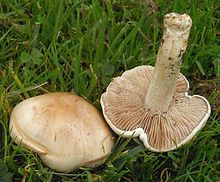
The buff to pale tan cap is 4–10 cm in diameter, convex then umbonate with an inrolled cap margin until old. The gills are pale grey-brown, with orange to brown spores and exude droplets in moist conditions. The stipe is 4–7 cm high and bears no ring, while the thick flesh is white. The fungus has a radish-like smell and bitter taste.[2]
Distribution and habitat
A common mushroom, Hebeloma crustuliniforme can be found in open woodland and heathland in summer and autumn, though may extend through winter in places with milder winters such as California.[3]
Toxicity
This fungus is poisonous,[4] the symptoms being those of a severe gastrointestinal nature, namely vomiting, diarrhea and colicky abdominal pain several hours after consumption.[5]
| This article uses material from the Wikipedia article Metasyntactic variable, which is released under the Creative Commons Attribution-ShareAlike 3.0 Unported License. |